
United States 2024–2025 In progress
Schematic design and feasibility studies for a community center that doubles as a resiliency and recovery center for the greater community after a disaster, alongside EPA grant writing.
Communities Lead. We Partner. Together we build.
Schematic design development, feasibility studies and grant-writing support.
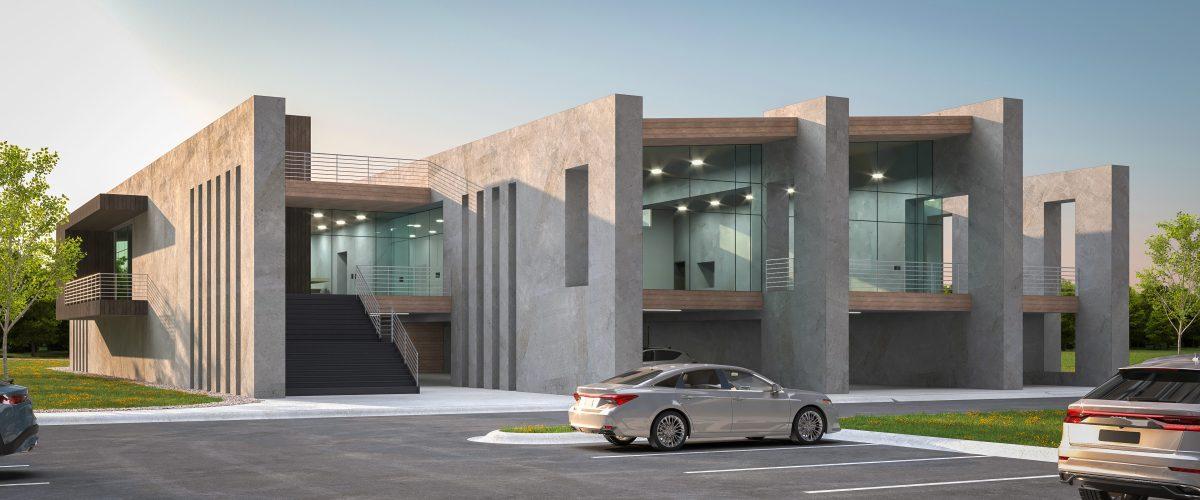
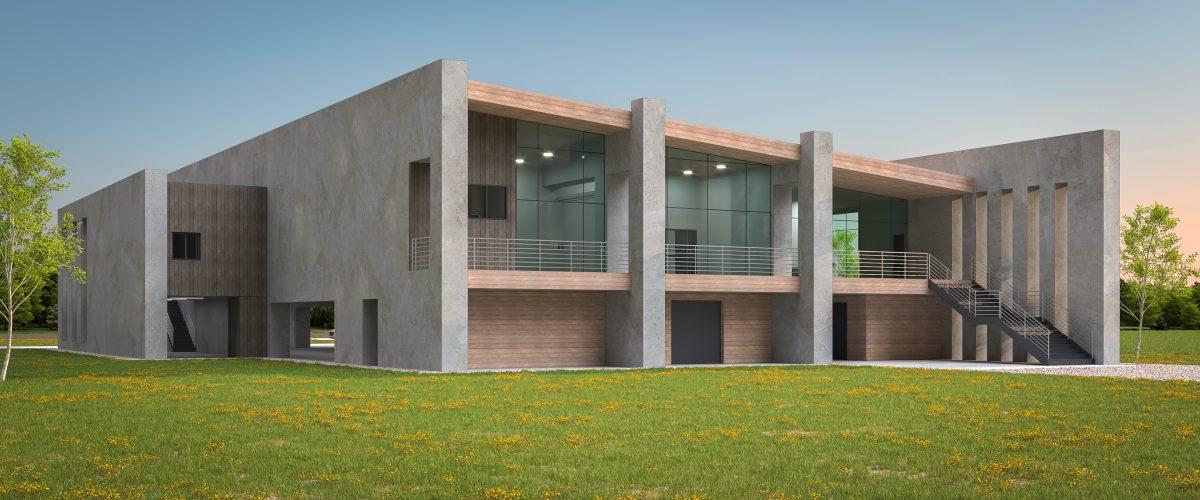
Building Humanity is partnering with the Grand Caillou/Dulac Band of Biloxi-Chitimacha-Choctaw and engineering and university partners to design a new community and resiliency center, after the tribe's gathering space was destroyed by Hurricane Ida in 2021. The center will provide space for cultural activities, elder meetings, community gatherings, education and day-to-day programming, while serving as a safe space during severe storms. It is designed to withstand a Category 4 hurricane and storm surge.
During Hurricane Ida in 2021, the house being used as the community gathering space for the Grand Caillou/Dulac Band of Biloxi-Chitimacha-Choctaw tribal peoples was completely destroyed. The Grand Caillou/Dulac Band tribal peoples have been living in their ancestral traditional village of Grand Caillou/Dulac along the Louisiana Gulf Coast for centuries. Their ancestors were primarily of the historical Biloxi, Chitimacha and Choctaw but also Atakapas and Acolapissa Tribes. Sustaining the village was done by trapping, fishing, hunting and farming. Their people still continue to live off the water and the land to the best of their ability today but their tribe is in a serious crisis.
The traditions and cultural practices that were handed down by ancestors are far less sustaining due to drastic environmental changes brought on by oil and gas exploration, erosion, salt water intrusion and climate change. We lose an average of a football field of land every 100 minutes: every day is a fight to save their tribe from losing their homelands, their culture and their identity to avoid extinction.
This project is in collaboration with Community Engineer Corps, Building Humanity, Engineers Without Borders, Purdue University EWB Chapter and Community and College Partners Program (C2P2). Together with the Grand Caillou/Dulac Band, we will be designing a community center to serve as a day-to-day cultural hub. The building will be able to operate and accommodate meetings with the tribe elders, holidays and community gatherings, and other activities. Additionally, with the recent closure of schools and other infrastructure in the Dulac area, the community center will also serve as an informal learning space for children.
The community center will need to be hurricane resilient in the case of a major weather event, including a storm surge. The goal is for the center to withstand a CAT-4 hurricane. While many tribe members evacuate inland during hurricanes, often, elder members of the tribe or those without adequate transportation will need to shelter in the building during a storm although this is intended as a last resort for anyone unable to evacuate.
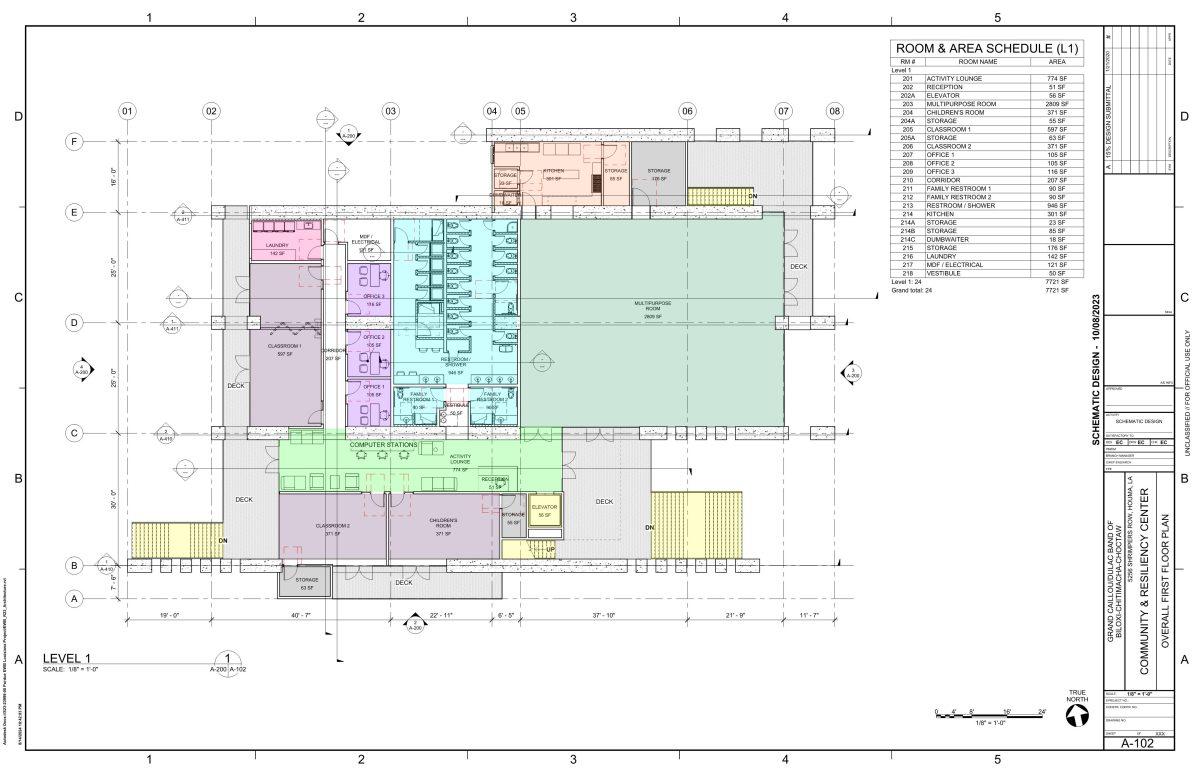
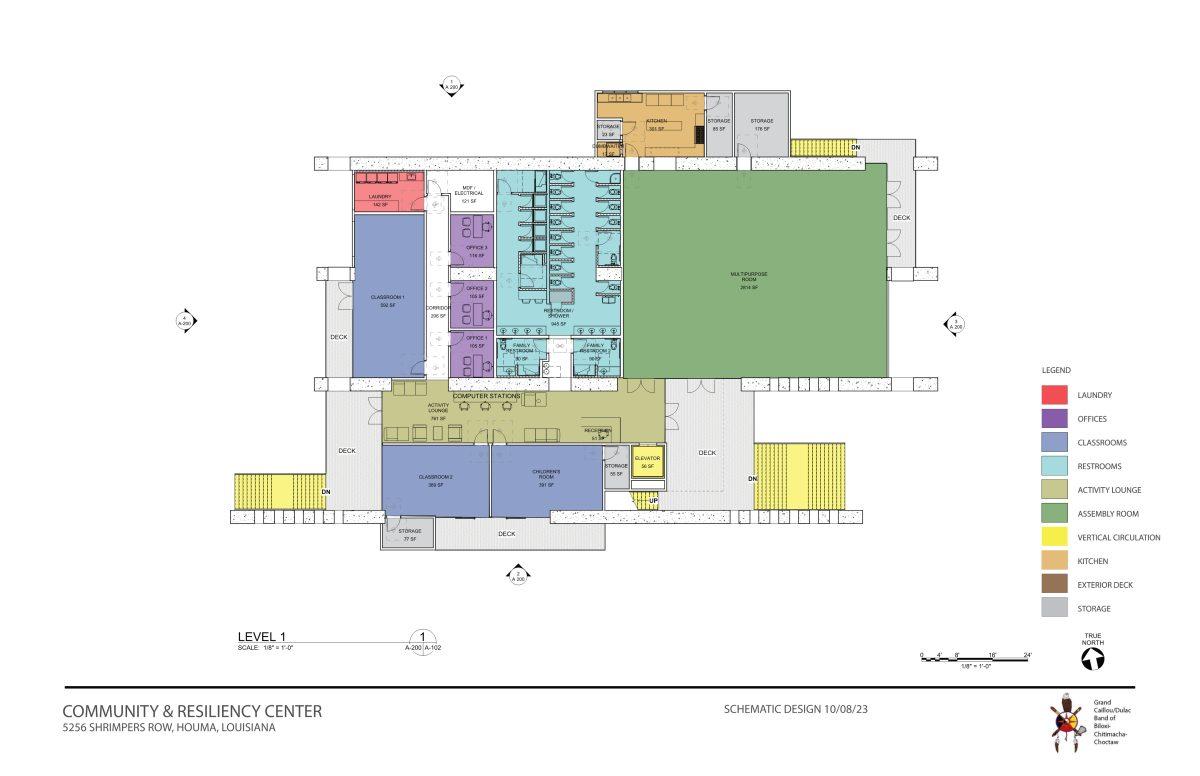
The current 10,000SF design takes into account the +15' flood plane requirements outlined by FEMA. Non essential program is located on the ground floor, with any equipment or critical items being able to be moved to the first floor in the event a hurricane is approaching. The first floor is comprised of the multipurpose space, a small kitchen, 3 offices for staff, a children's room, 2 classrooms and a central spine which will provide space for members of the community to congregate or utilize the communal computer stations.
The roof will house a spacious deck for community use, with space for solar panels and a protected mechanical well.
This project has ambitious sustainability goals. It will aim for a minimum of LEED certified as well as Zero Energy Certification through Living Future. We are also planning on utilizing reclaimed water pursuant to local laws.
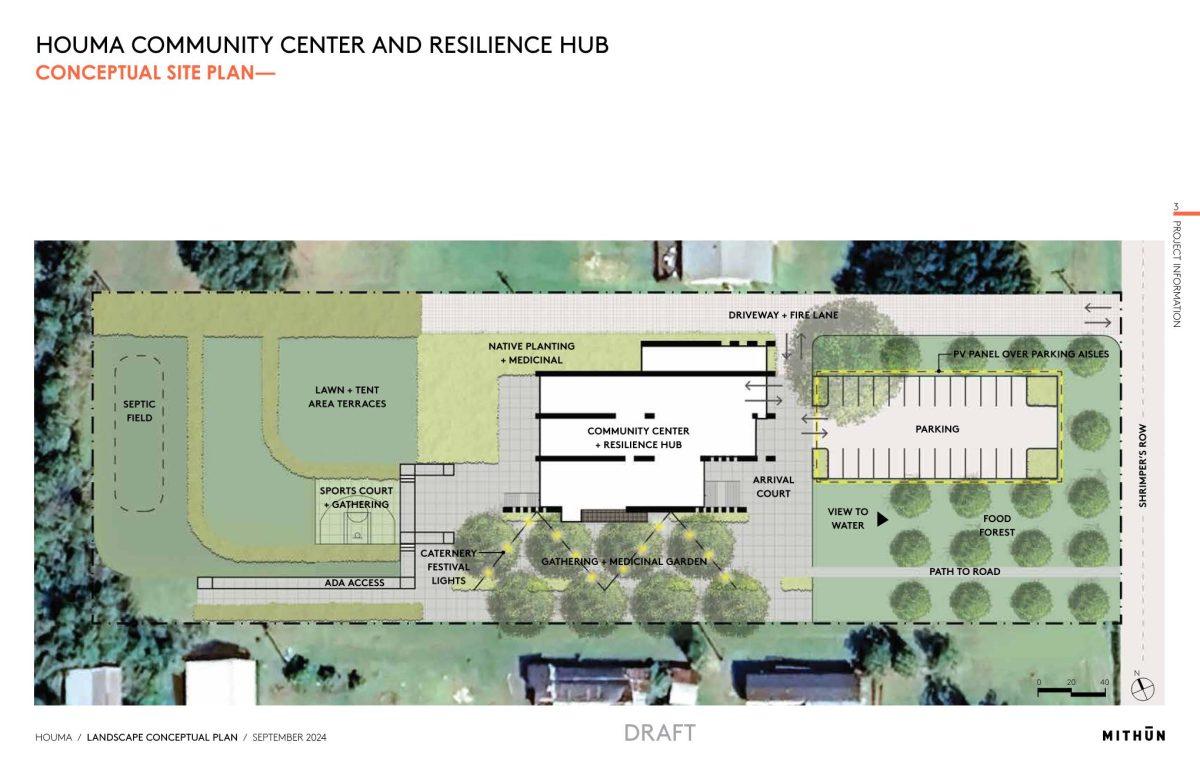
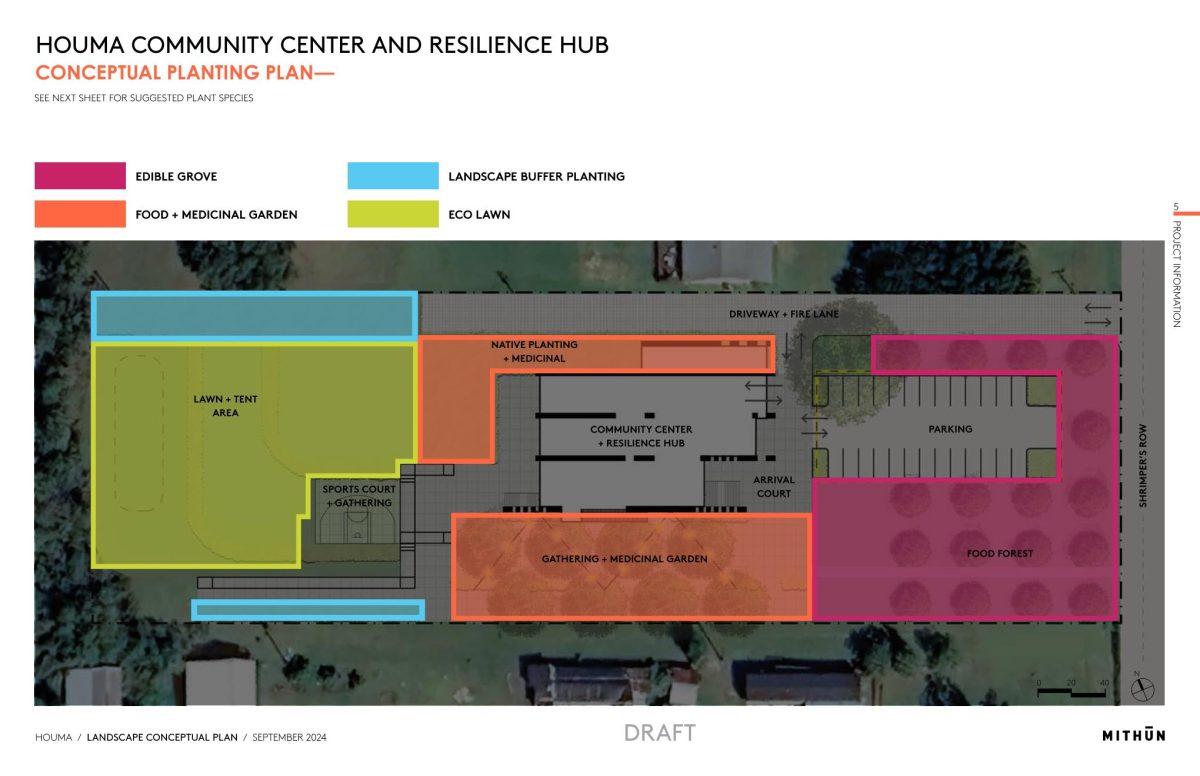
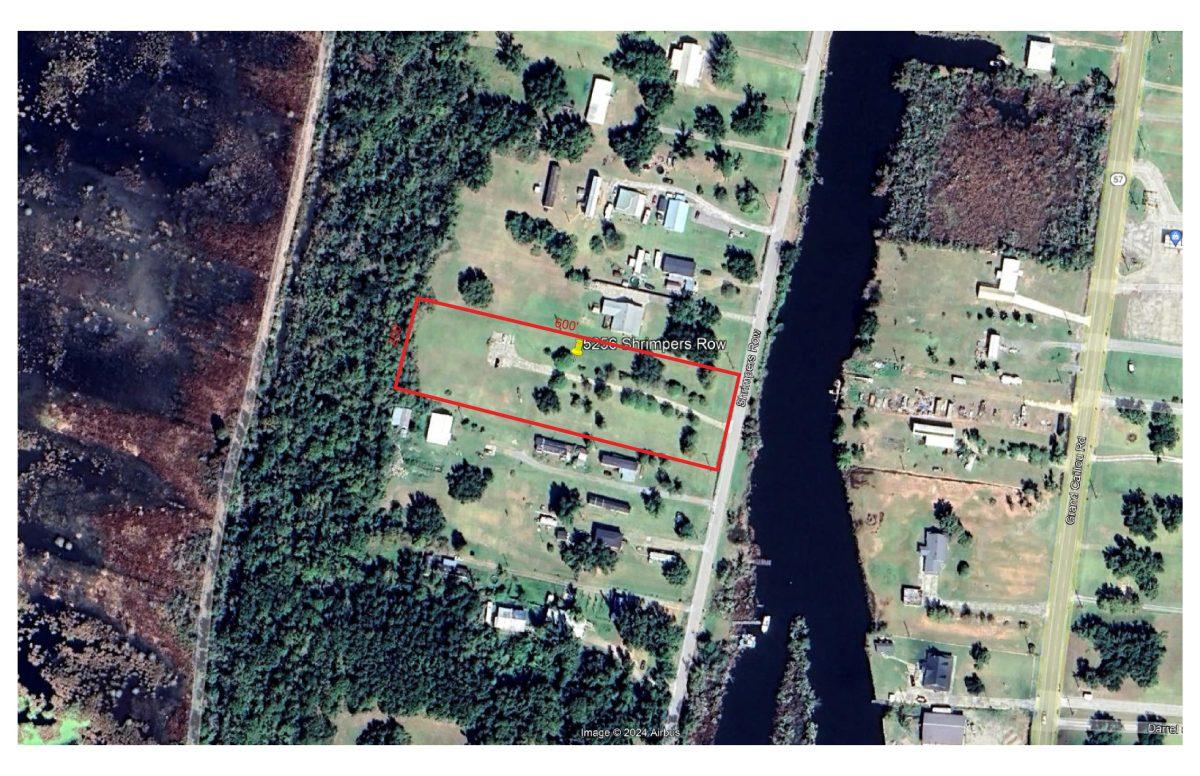
Design provided by Mithun, a multidisciplinary design firm headquartered in Seattle. The landscape allows for lawn/tent area, native medicinal planting, gathering space, food forest and play spaces scattered around the site.
Initial cost estimate has come in at $15.7 Million.
In early 2023, the Community Engineering Corps reached out to Building Humanity for architectural expertise on a pivotal project in Louisiana. Our team came on board in May to support the development of a community resiliency center. Initially, understanding the project’s dynamic and mission took time; however, through close collaboration, our input gradually helped shape a promising design vision.
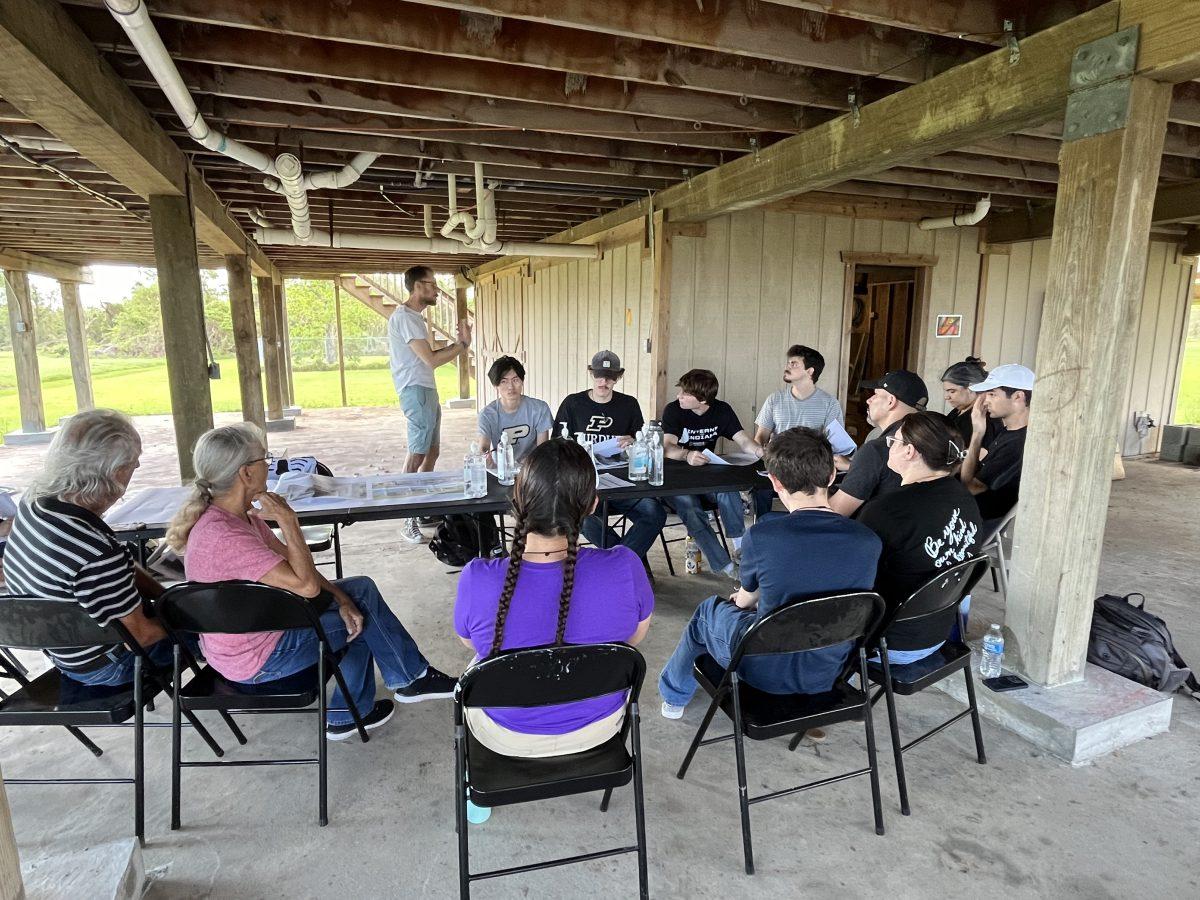
Recognizing the need for swift action, the project team identified two grant opportunities, the EPA Community Change Grant and the Terrebonne Parish Community Development Block Grant, which required expedited design development. Throughout the summer, Building Humanity produced schematic designs for the resiliency center while hosting user meetings designed to capture critical functional requirements for both everyday use and disaster recovery. In October, professional and student partners traveled to Houma to review these schematics with tribal representatives and gather essential feedback. With this valuable insight, we refined the plans alongside professional engineers and prepared an accurate cost estimate for inclusion in the grant proposals.
During 2024, Purdue University students took a leading role in drafting the bulk of the EPA grant application under the oversight of the Technical Assistance Coordinator for the EPA Community Change Grants Program, partner grant writers, and academic advisors. Building Humanity captured the building design and functionality portions of the grant proposal.
Initial discussions positioned Purdue as the primary applicant for the EPA grant. However, after extensive conversations and legal consultation, the lead role ultimately shifted to the tribal community, with Purdue providing program and grant support. This transition not only empowered the tribe by showcasing their capacity to manage a significant grant, but also enhanced the overall project ownership.
Although our original plan targeted a Spring 2024 submission, adjustments in leadership and emerging challenges postponed the application.
Building Humanity continued to refine both the design and the cost estimate throughout the year. Pro bono contributions from Mithun yielded an innovative landscape scheme that enhanced site planning and budgeting accuracy. In parallel, professional renderings, developed by Jacobs designers, highlighted the building’s materiality and intricate details. These renderings were presented during the October visit to Houma, where in-person sessions with tribal elders and community stakeholders further honed the project’s vision.
The EPA Community Change Grant was eventually submitted on November 14th, 2024.
Initial feedback from the EPA was that the second batch of applications would not get an answer until late Spring 2025, and that they were running out of money as projects were on a first come first serve basis.
At the start of 2025, the change in administration resulted in the freezing of EPA grants, with some previously awarded funds later cancelled, an outcome raising both ethical and legal issues. While the tribe remains optimistic about potential reversals, our team has shifted focus to explore alternative funding pathways and service strategies for the community.
During a team visit to Houma in May 2025, several strategic project goals were defined:
This strategic realignment underscores our commitment to responsive, sustainable solutions that evolve with the community’s pressing needs. Building Humanity remains dedicated to transforming challenges into opportunities through innovation, collaboration, and a deep-rooted commitment to community resilience.
As Chief Devon says "we flow like water".
Elder Chief Shirell Parfait-Dardar is featured in the National Geographic documentary series “Impact,” which chronicles the lives of resilient women around the globe. Produced by “Wonder Woman” star Gal Gadot, it premiered on April 19th, 2021 on National Geographic.
Community Engineering Corps, Engineers Without Borders, Purdue University EWB Chapter, and the Community and College Partners Program (C2P2).
A sustainable, low-maintenance sanitation solution designed to improve waste management, reduce environmental impact and give future community sites a model they can copy.
A sanitation and hygiene facility for the Community Outreach Program Office: restrooms and bathing for families using the new playground, and a dependable, dignified place for local unhoused residents to meet basic hygiene needs.
Designed with Louisiana College as a safe, inclusive and durable play environment for local children. Awarded $275,000 from Home Depot and scheduled for completion by December 2026, with a community “red shirt day” inviting volunteers onto the build.






What's next
The work is underway. A gift moves it along, and two weeks on site moves it faster.